

Reading, I think we can all agree, is a good thing.
Reading combined with lots of time, many sources of material and a willingness to go down rabbit holes can be a double-edged sword.
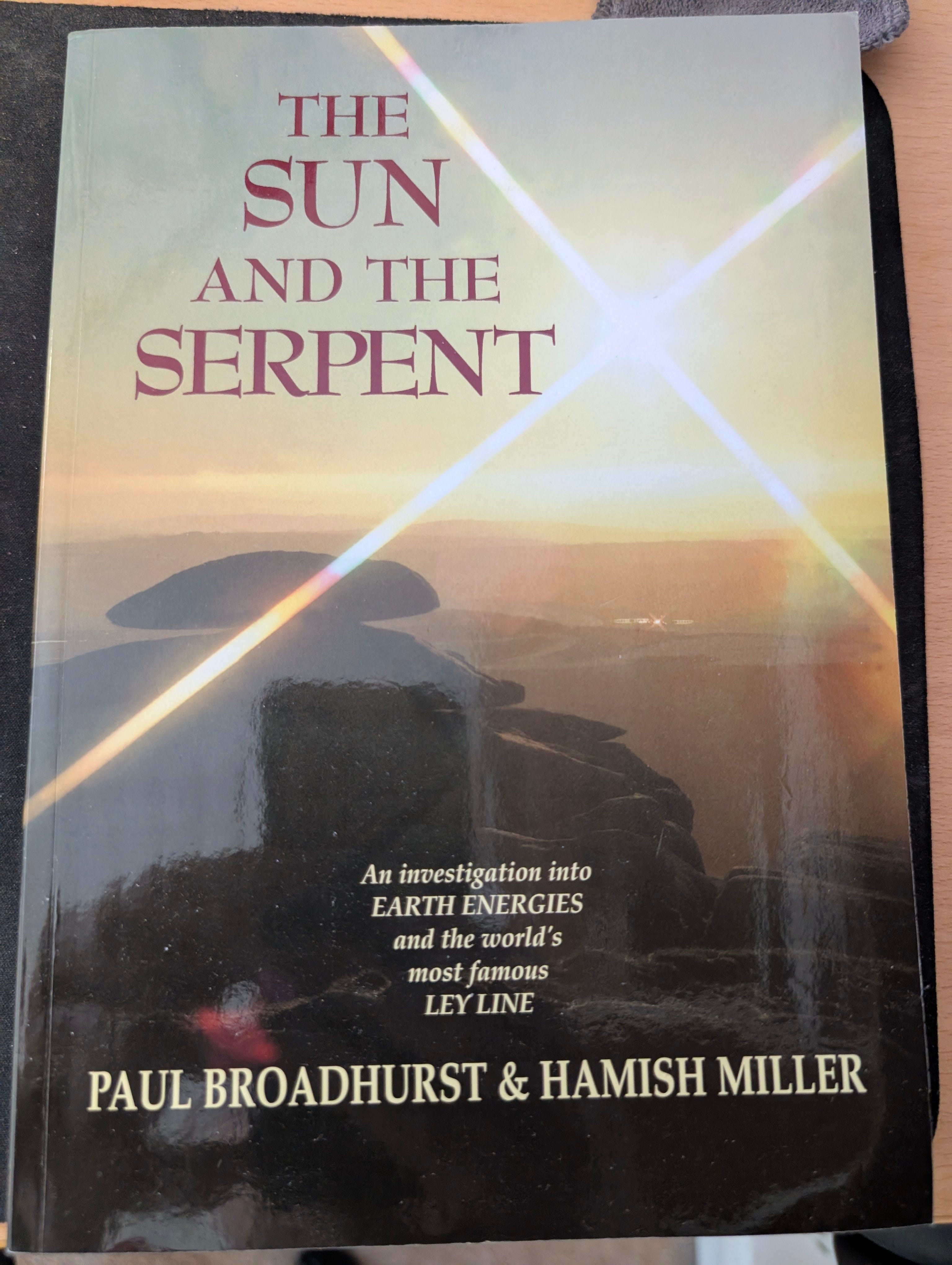
Recently, following my interest in in ancient sites, I read “The Sun and the Serpent” by Paul Broadhurst and Hamish Miller, which sent me off down routes of internet research, reading through my vast collection of kindle books, heading to the local libraries, and trying to source obscure books through second hand book shops. Retirement is exhausting!
As you will of course be aware, Alfred Watkins came up with the idea of ley lines in 1921, having had a flash of inspiration, whilst looking out over his native Herefordshire, that many ancient sites, landscape features and churches seemed to fall along straight lines. He laid out his ideas in “The Old Straight Track”, published in 1925. For Watkins, the idea was more that people had deliberately arranged these features to mark track-ways, ancient routes etc. rather than anything that might be considered a bit woowoo. Despite criticism that the human mind is wired to see patterns, and the recent attempts to debunk by finding leys based on McDonalds or Greggs branches, Watkins just flagged the patterns (and probably the nature of the aligned sites is more telling than the number) and never made any connections with Earth energies. This came later, in the 1960s (what were the odds?).
And so, back to “The Sun and the Serpent”. This is the tale of the attempt to dowse along the St. Michael alignment. This line runs from the furthest west in mainland Britain (just near Lands End) to the furthest east (Hopton-on-Sea in Suffolk), passing through St. Michael’s Mount, many of the Cornish Stone Circles, large numbers of churches dedicated to St. Michael, Glastonbury, Avebury, Royston, Bury St. Edmunds etc. en route.
Anyway, what the protagonists found, was that the straight alignment was not matched by the actual dowsing. The energy line snaked its way across the country, bending its way through and around various features. This aspect explains why these lines are referred to as serpent lines or dragon lines around the world (and the details of how various countries view them are fascinating - another rabbit hole!).
Interestingly, when the dowsers reached Avebury, they realised that they were dealing not with one current but two (and so had to go back to the beginning!). One is the masculine/solar energy (which the Christians replaced with St. Michael) and the other was the feminine earth energy (which the Christians replaced with St. Mary). The Christians inadvertently perpetuated these pagan alignments my placing churches dedicated to these saints all along the lines (either because they thought they could use the energy or to try and suppress it). The Michael churches are generally on the high and rocky places and the Mary ones in valleys, along rivers, through sacred wells etc.
Someone kindly created a Google map showing the lines…
Whether you subscribe to any of this or not, once you have read about it, it is hard to see the British landscape, or the sheer volume of churches dedicate to Michael or Mary, in the same light again. And regardless of whether the ley is real or not, there are many fascinating and sacred places flagged along this route, and it occurred to me that visiting some of these places and especially the “special” places where the two lines cross, would not be the worst theme for exploring parts of Britain.
And so this, by a somewhat circuitous route, explains why I find myself packing up the car and heading to the southwest.
Not that I ever need much of an excuse to head to the southwest, it being a glorious part of the country. The mission on this occasion is to visit some of these key sites in and around Glastonbury, but with some side missions of visiting places that have been on my list for a while, but unrelated to the “dragon line tour”.
The journey does not get off to an overly auspicious start. Traffic is fine and the weather is beautiful but the desire that I conceived for a lunchtime pasty was quickly thwarted. I could have sworn that Michaelwood services on the M5 had a West Cornwall Pasty Company stand. Whether I have misremembered or the concession has gone since I last visited, that service station is dead to me now.
Unfilled but undaunted, I head off once more towards Chew Magna and Stanton Drew Stone Circle. I have been meaning to visit here for a while, but it is never quite ”on the way”. Today it is, but I fear I may have come too close to the gravitational pull of Bristol and Google maps took me through the city. I have a suspicion that a low emission zone charge may be wending its way towards me as I type…
Stanton Drew is an impressive site. It’s not clear whether it was originally one stone circle or multiple and it is hard to tell from ground level, but I think it was originally part of a much larger ceremonial site. Most of these places were. Avebury for example was a 3 mile long serpent temple (by far the most impressive megalithic site in Europe) now containing 76 remaining stones from an original 600 or so. Farmers/greedy landowners have a lot to answer for!
Anyway, I illicitly enter Stanton Drew. I am all for the honesty box and would not avoid paying my £1, if such a thing as a pound coin was in my possession. I know these are ancient sites but if they want funding, they probably need to move with the times! That said, it is English Heritage, so I am probably entitled to free entry anyway. It is good to be able assuage this guilt to counteract my later blasphemous behaviour.


At the nearby Druid Inn, there are an number of other standing stones called the Cove. Luckily, although the sun was out, it was not particularly warm, so I was able to resist the temptation to have a pint in the beer garden whilst contemplating the stones.


Next stop Priddy. I am actually looking for the Priddy Circles - ancient earthworks near the village -but figure I will stop for a look at the village. Local tradition has it that Joseph of Aramethea (metal trader and regular visitor to the region) and his young nephew, Jesus, stayed in Priddy with the lead workers on their way to the Isle of Avalon.
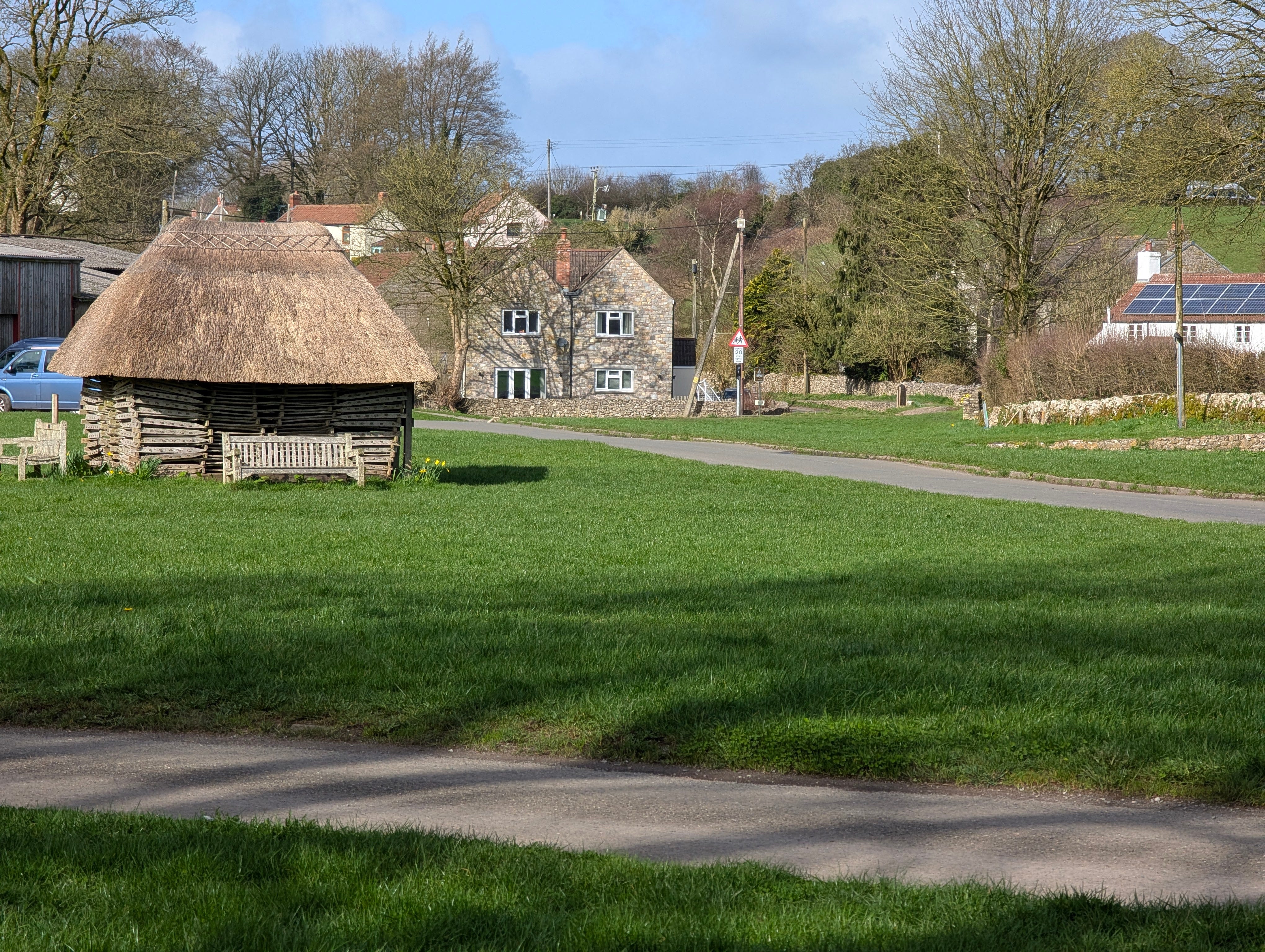
An old Mendip saying reflects how matter‑of‑fact this became in local lore: “As sure as Our Lord was at Priddy”, implying that his visit was taken as proverbial certainty in village tradition.
So I couldn’t not stop there could I? A pleasantly rural spot but, as is so often the case in rural locations, I find my mind turning to the film Deliverance and can’t help a slightly altered line from the film going through my head: “Sho got a priddy mouth”. I am going to hell.
Thinking that I will pay for this during my tour of Wells Cathedral tomorrow, I soon discover that divine retribution is much more immediate and completely fail to find a decent viewpoint for the Priddy Circles. That said, I suspect a drone is probably the only decent viewpoint.
I do however spot some barrows across a field as I am sneaking through some woods looking for a suitable spot to relieve and old bladder, so all is not lost.


I figure that this is probably all the sightseeing that I will manage today and decide to head for my hotel for the night at Wookey Hole. I haven’t stumped up to stay in the witches hat suite
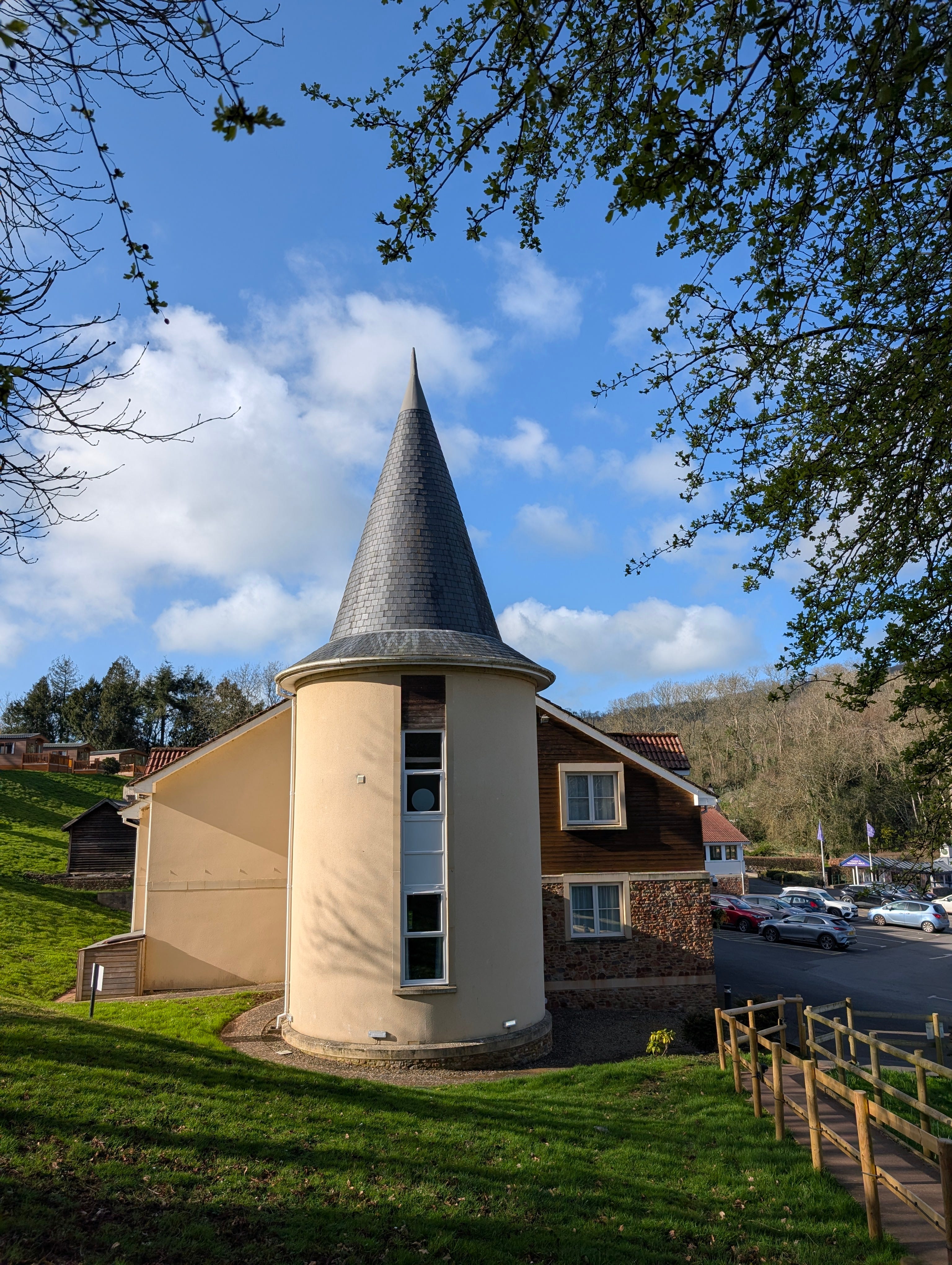
but I do avail myself of the Witches Tipple IPA in the bar, so feel that I have immersed myself in the theme.
Much to my delight, the hotel is surrounded by hundreds of corvids, making quite a din. I am a big fan of corvids, but still have some trouble distinguishing between them. I think that these were rooks by the look of them, and also by the many, many nests in the surrounding tress, which I believe is a bit of a rooky thing!


Wells Cathedral tour tomorrow (one from my long time list), and then potentially some other sites on the Mary/Michael line and or some Saxon/King Alfred stuff. Will see what the weather has in store…