

The sleepy town of Wells is famous for … well … wells. It was the many springs of pure water which led to Wells being considered sacred and becoming the the home of a cathedral completely disproportionate to the size of the town.
Of course my impression of Wells was formed in my youth, watching Black Adder which featured the “baby-eating Bishop of Bath and Wells”.
I would be the first to admit that this is not a well formed profile of the town. Oddly prescient though.
So.
The Cathedral.
It was actually the first Gothic cathedral built in Britain, the consequences of which were that
they really wanted to impress people and
they were making it up as they went along
The cathedral is indeed magnificent and they certainly used to indulge in some grand theatre there, to mesmerise the peasants who made pilgrimages. The West face has (or had) hundreds of statues, all brightly painted at the time. It must have been quite a sight. Apparently Oliver Cromwell (justly famed for his sense of fun and theatre) had many of them removed.


There are rows of holes are for trumpets and for singers to stand behind. Apparently when they had processions there, the trumpets (hidden from the crowds outside) would sound from the cathedral. Once the procession started, the singers outside would be answered by those hidden inside, so that it would appear as though the cathedral itself was responding. Must have been quite awe-inspiring for the uneducated masses at the time. I gather that this is still done on Palm Sunday (the singing part least), so probably worth a look if you are in the vicinity.
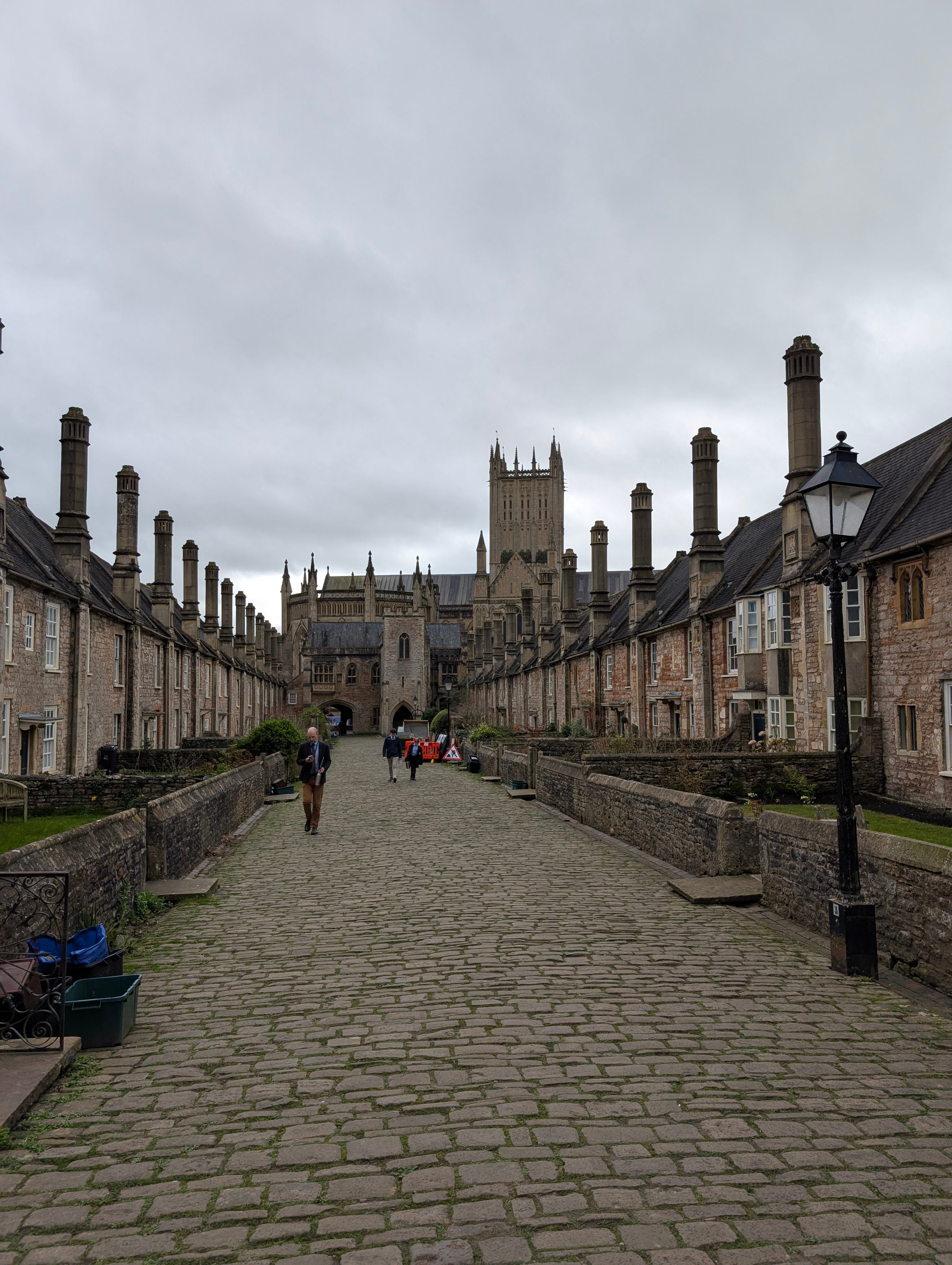
As the choir were in constant demand, they even have their own street of houses next to the cathedral, which is still in use for the same purpose today and is one of the oldest unchanged medieval streets around.
Inside, the cathedral is stunning. The strange double (scissor) arches are unique to Wells are are in fact a repair to add strength. When the cathedral was built it had no tower, but as others were built that did, a situation of tower envy developed and they decided to add one. Unfortunately, due to the soggy nature of ground filled with springs, the tower immediately started to sink on one side. The arches were part of the shoring up.


The clock inside is getting on for 650 years old. It is the second oldest functioning clock in the world (don’t mention it though, I think there is a bit of rivalry between Wells and Salisbury who have an older one and it is a sore point). As I discovered on my tour of the high places in the cathedral, the original mechanism for the clock is now in the science museum. I was assured that it still functions fine for telling time, but that an upgrade was needed to run the figures and additional clock on the side of the cathedral and a bell in the tower. Early automation at work!
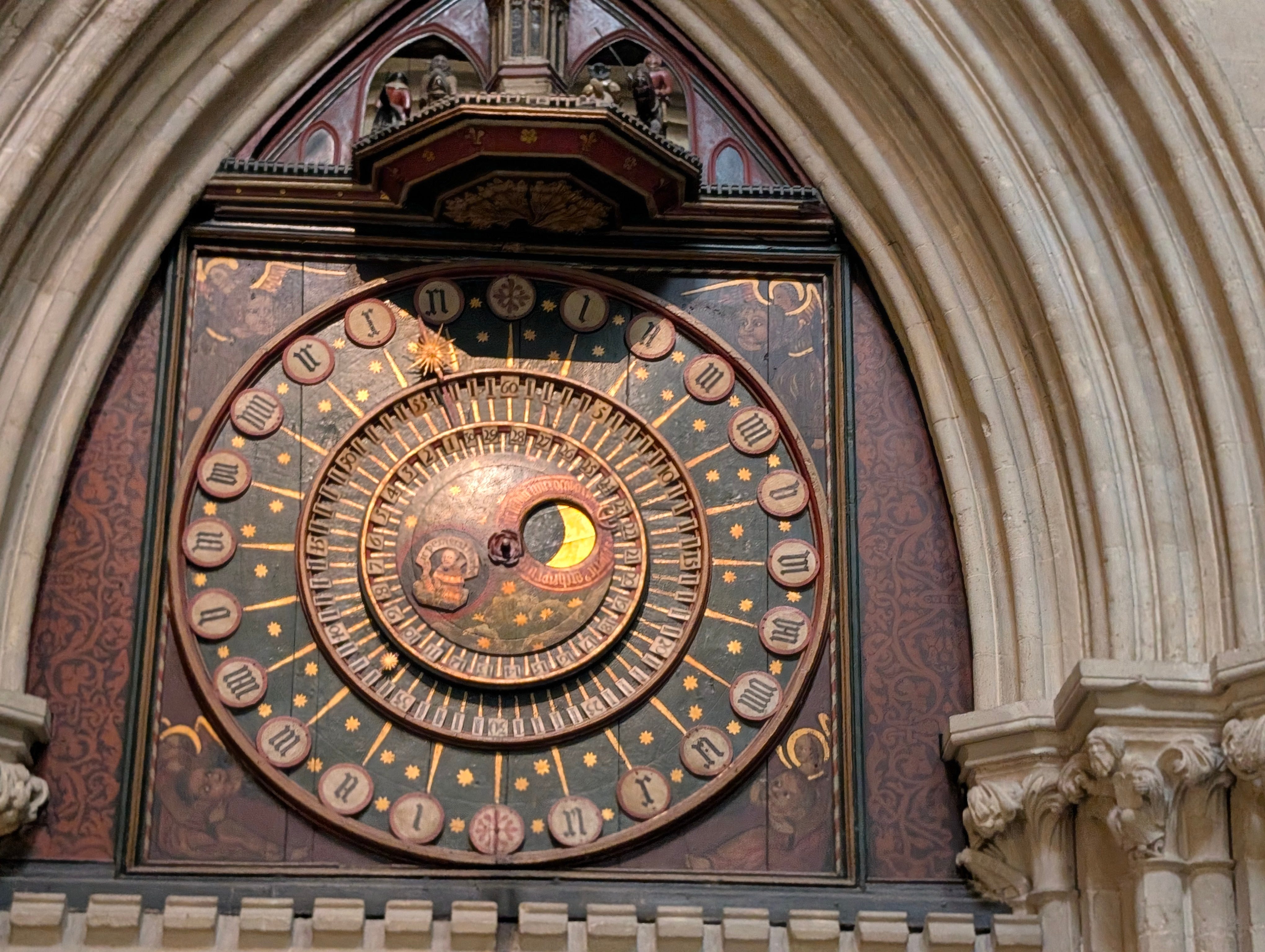
They are just about to to replace one of the knights on the clock (can you guess which?). Apparently someone worked out that that figure has been hit several hundred million times. Now that is putting in a stint!
Oh yes, and the moon phase matches reality … which I would attempt to verify if it wasn’t cloudy and wet.
The tour of the high places was excellent. Apart form all of the fascinating information, I got to see some interesting spaces and some spectacular views.


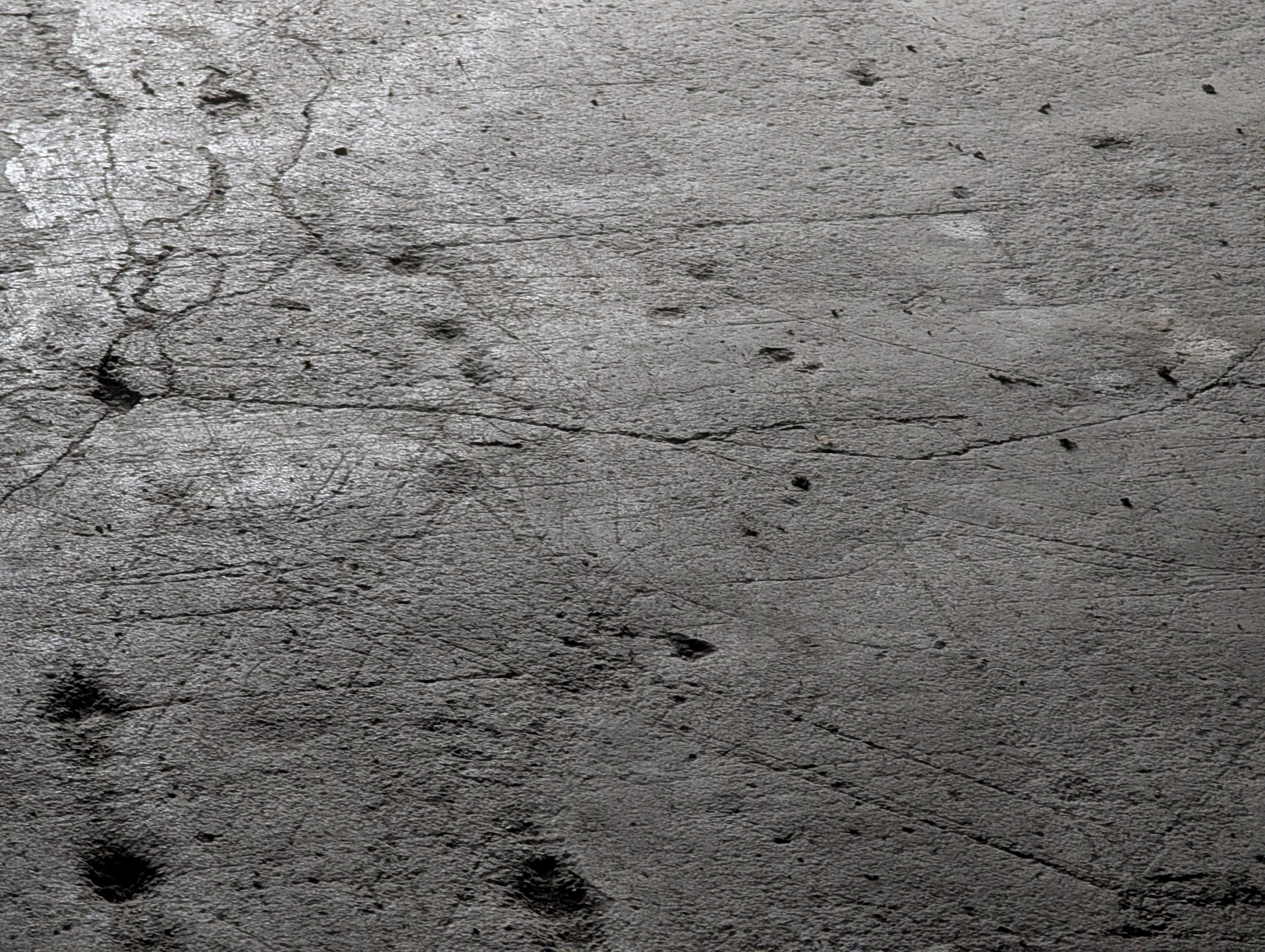
Also, I got to see the design room where the master Masons would scrawl their work. It is essentially a plaster of paris floor, which they would scrape designs into. When it got full, they would just pour another layer on.
Back at ground level, I admire the scroll work at the top of some of the pillars. Apparently the masons were given some artistic licence with these. I can’t help wondering if Dr Seuss ever visited here…


From Wells, I am heading to some other high places. First stop, Burrow Mump. This is, in theory, a natural hill but I have my doubts. It looks terraced, clearly resembles Glastonbury Tor and apparently the soil on it is not for the area. That would seem a bit of a giveaway to me. The wind is brutal at the top, but the view is great. The flooded fields probably give an idea of what it used to look like when Glastonbury was an island.


There are stories related to King Alfred associated with the Mump and it may be that it was used as a lookout point when Alfred was hiding in the nearby marshes of Athelney, trying to avoid the Danes who had rampaged through Wessex.
A monument to Alfred stands in a farmer’s field at Athelney. Usually you are allowed to walk to it but I found it surrounded by a low electric fence. I probably could have stepped over but I tend to think you should encourage farmers to grant access by not abusing the privilege. The fence was clearly there because it was lambing season.
This also gave me pause of course as I had an episode of herbivorous horror about the same time last year, and it looked as though it might have been lining up for a rerun!
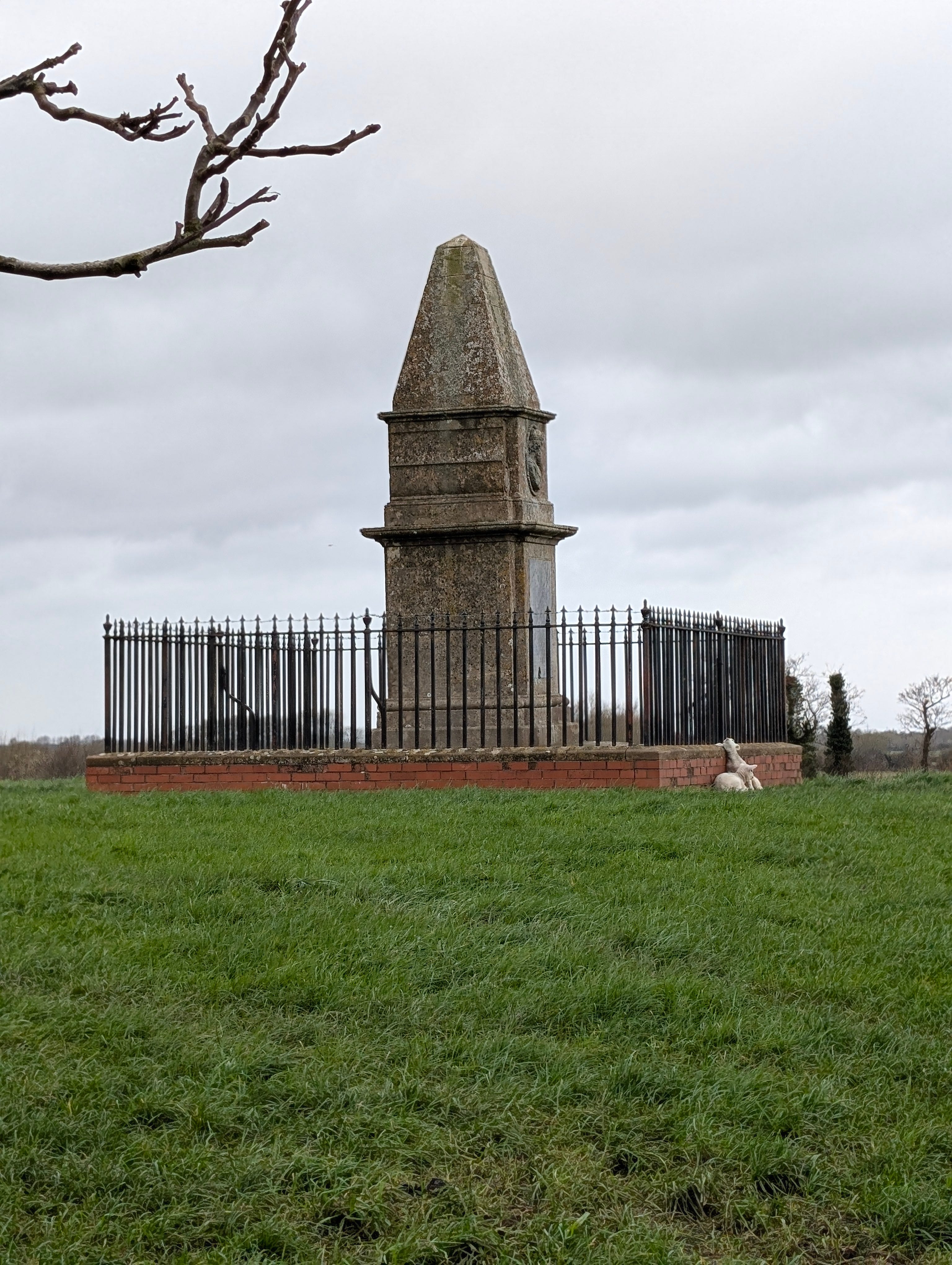
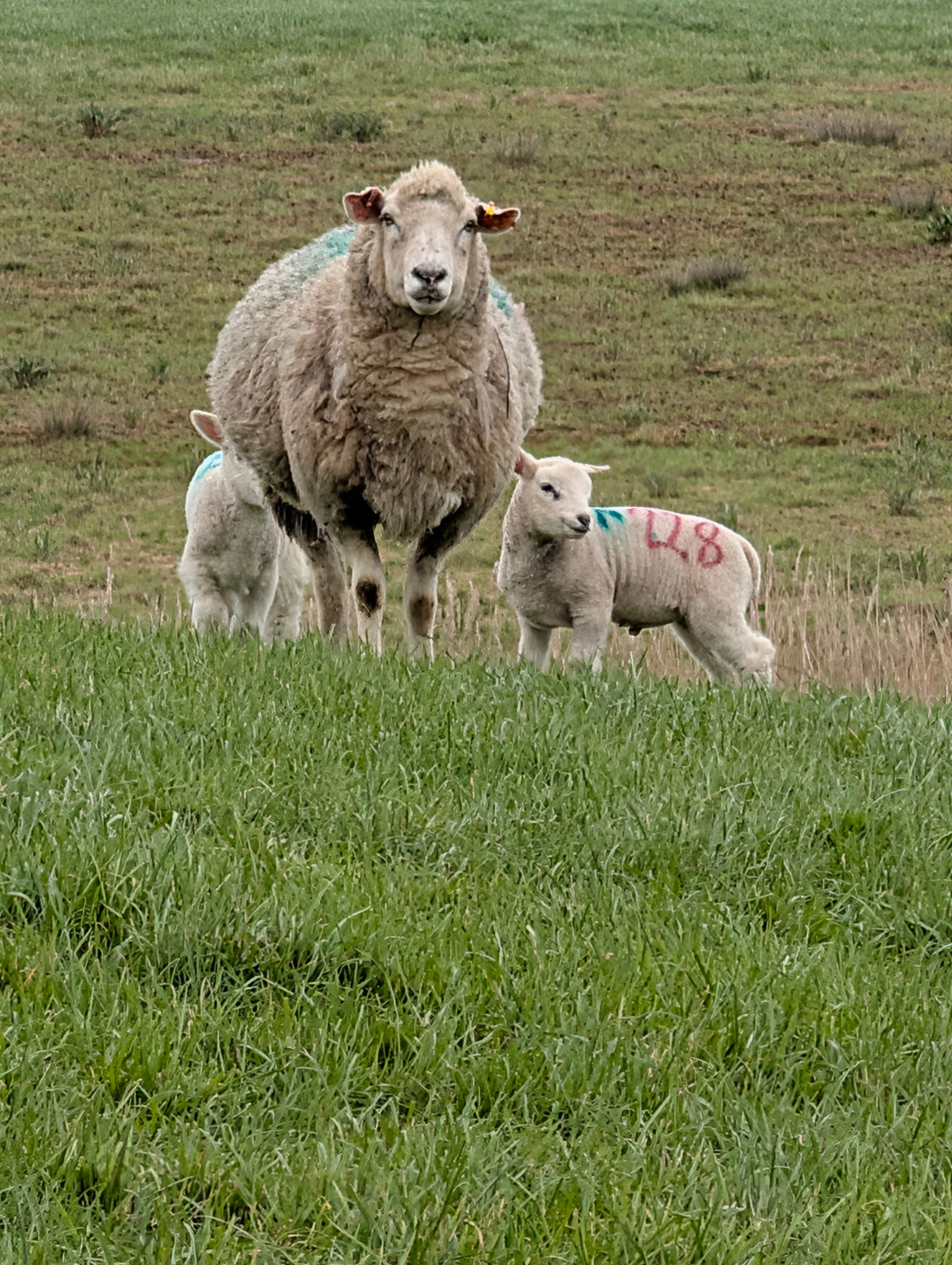
Can’t help but thing that if this was in the USA, there would be a whole Alfred & the Swamp Theme Park and Holiday Village here. Still, understatement is what we Brits do best.
And so, on to my last stop of the day, the Wellington Monument. This is a hilltop monument to the Duke of Wellington. Should such things interest you, it is the world’s largest three sided obelisk. Why 3? No idea. Probably some arcane reason as both this and the Mump are points where the Michael and Mary currents cross. I can’t help but wonder if the builders knew this or if it just felt like an auspicious spot.


Luckily the monument was closed, so I was spared the ordeal of an epic climb up to the top.
Finally arriving in Glastonbury and my digs for the night, the road that the hotel is on is full of traveller’s caravans. Yep, this is Glasto!
Ah, your intimidating friends again: the lambs!
Really beautiful cathedral 👀