

Some years ago I spent a night in Brian Head, a ski resort in Utah. Brian Head is about 10000 feet above sea level and I found myself struggling with the altitude. In particular I ended up with a bad headache and felt as though my eyes were about to explode. It is possible that trying to treat altitude sickness with alcohol may not have been the best approach. Who knew?
So it is with some minor trepidation today that I approach a trip to the summit of the mighty Mount Teide, which is a good 2000 feet higher.
Anyway, first a little history / legend.
As alluded to yesterday, the original inhabitants of Tenerife were the Guanches. Genetic and linguistic evidence suggests that the were descended from the North African Berber populations from the Atlas Mountains - not entirely surprisingly, given the location of the Canary Islands - arriving about 1000 BC.
The Spanish did not arrive until the 14th and 15th centuries and so 1000 years ago, when the large eruption of Teide created the iconic conical top of the mountain, the population would have been entirely Guanche.
This must have been a terrifying sight for the locals. They were aware of the volcano and would have experienced sulphury outpourings from fumaroles and left offerings to appease the demon Guayota who they believed occupied it's depths. Clearly this did not work as 1000 years ago a massive eruption ejected huge amounts of lava, formed the new summit and quite likely ejected enough dust that the island would have been in total darkness for a time.
The legend goes that Guayota stole the sun and hid it inside of Teide. Guanche priests beseeched their creator god, Achamán, to intervene. Achamán descended into the volcano and did battle, the signs of which were seen in the continued eruption. Eventually Achamán was victorious, releasing the sun and trapping Guayoto inside the volcano.
Of course scientific explanations are available, but I feel that this explanation is much more fun. Consider yourself informed!
Anyway, I am booked on the 9:50 cable car up to the summit and so set off bright and early, avoiding what I have been advised is some challenging parking later in the day. The road up to Teide is the same one that runs past my hotel, so that’s handy! The drive is spectacular: up through pine forests, into scrub and desert and then a weird lunar landscape with massive lava fields, weird rock outcroppings and the multi-hued rocks common to volcanic regions. I have been to a number of volcanic regions around the world, but Teide National Park is right up there with the most impressive.


The trip up Teide is quite quick and the temperature gradient impressive, but I have come prepared with extra layers. I didn’t bother registering and paying for a time slot to go to the very top. The final walk up is being attempted by some brave souls but, after reading that the incline was about 60%, I felt that my presence wasn’t really called for up there. On witnessing the reality of it, I think that was probably a good call.
Especially with the way I felt when getting off the cable car. Pretty light headed and short of breath, but mercifully eyes still intact! And there is plenty to see on the walk to the viewpoint at this level ( and so will be needing those eyes).


Teide prime mission accomplished, I head off to explore Teide National Park some more, and opt for a hike at Siete Cañadas. This is very pleasant, if a tad warm, with almost constant views of Teide in the distance and various volcanic scenery and struggling plant life enroute.


The return leg is stunning as you point back towards Teide and the caldera.
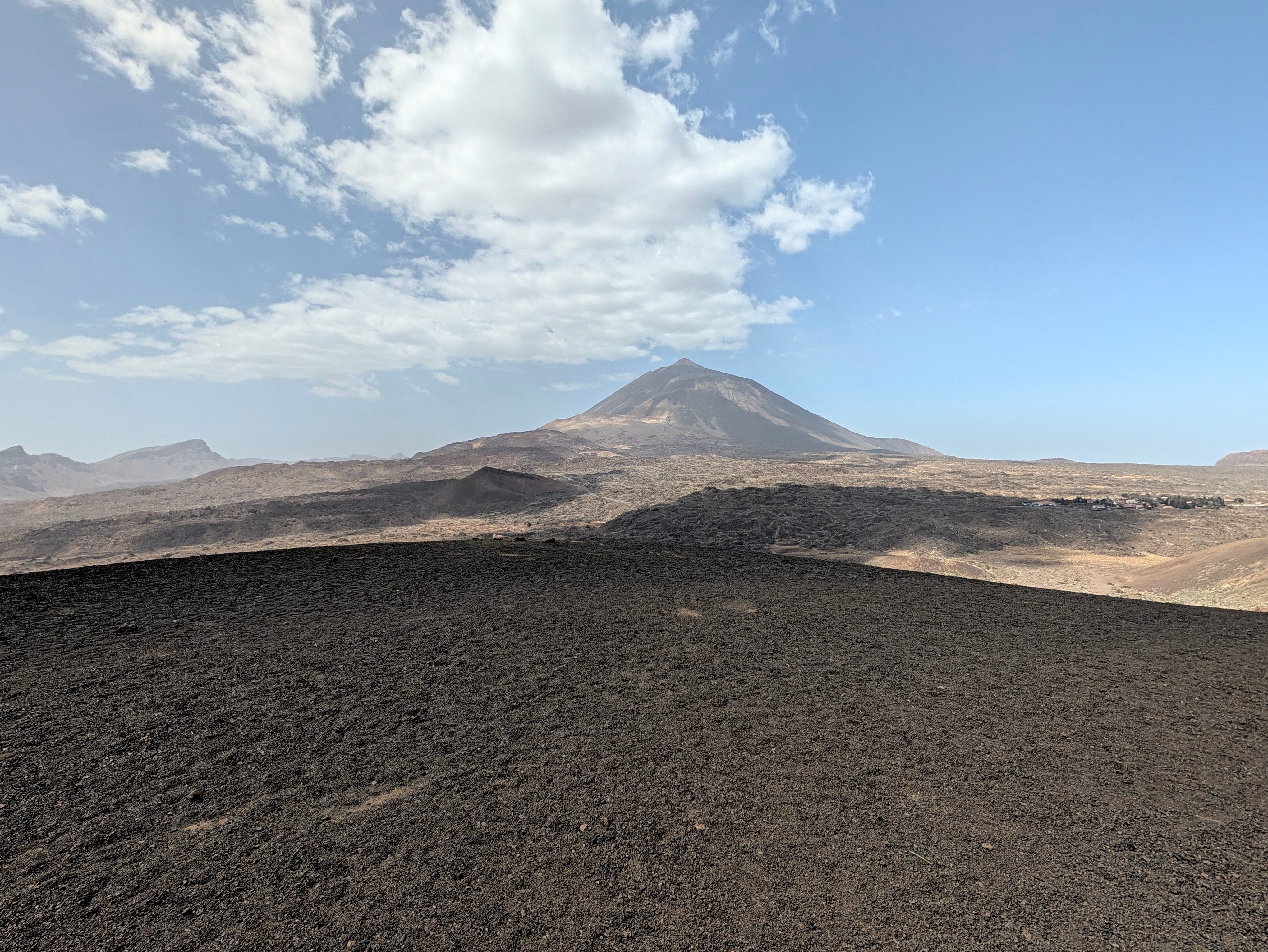
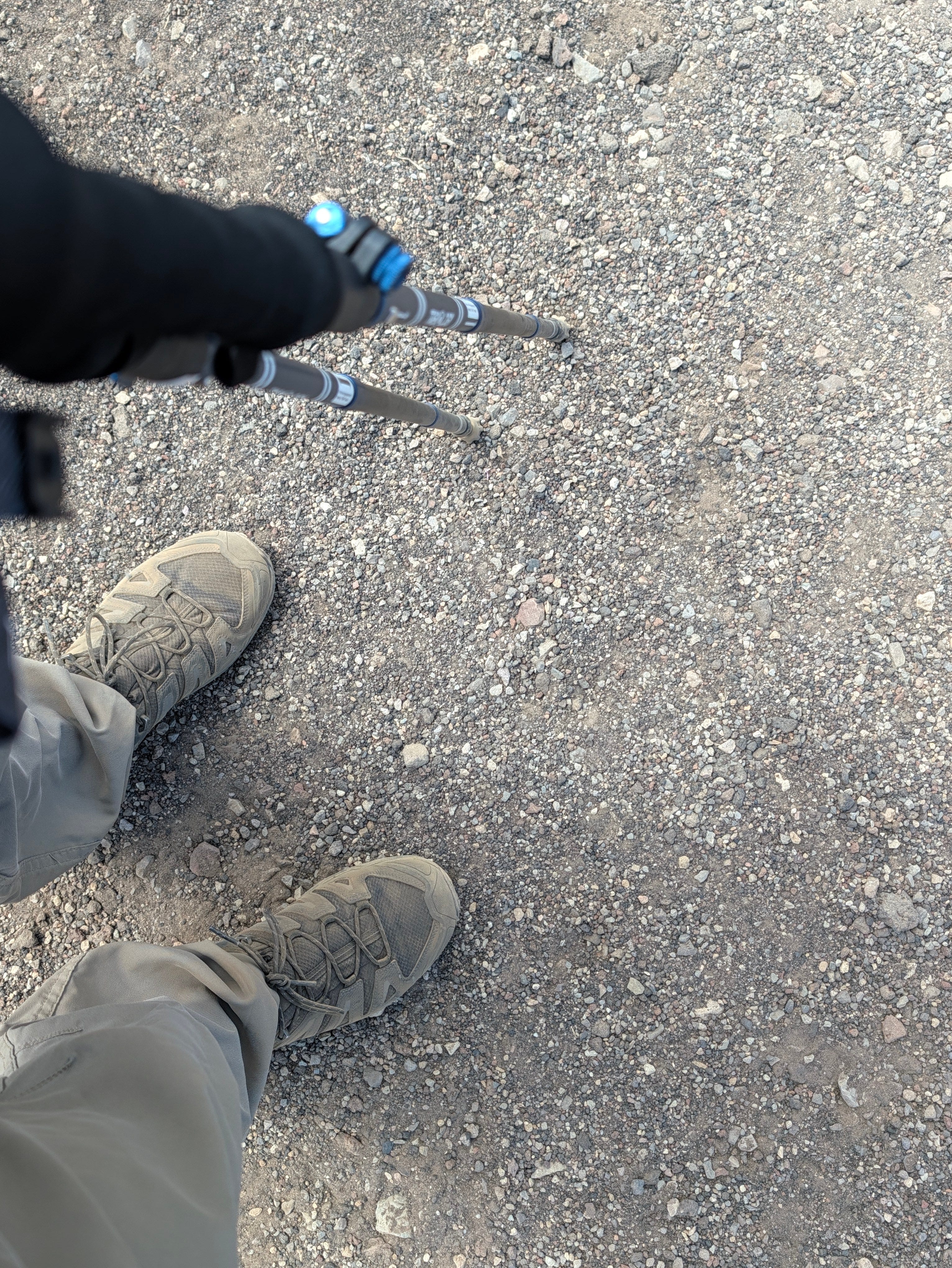
There is a quite challenging section with a fairly steep descent on lava dust and gravel and I am once again beholden to my Salomon shoes and glad that I bought walking poles with me. Without these, I would have spent a lot of time on my ass!
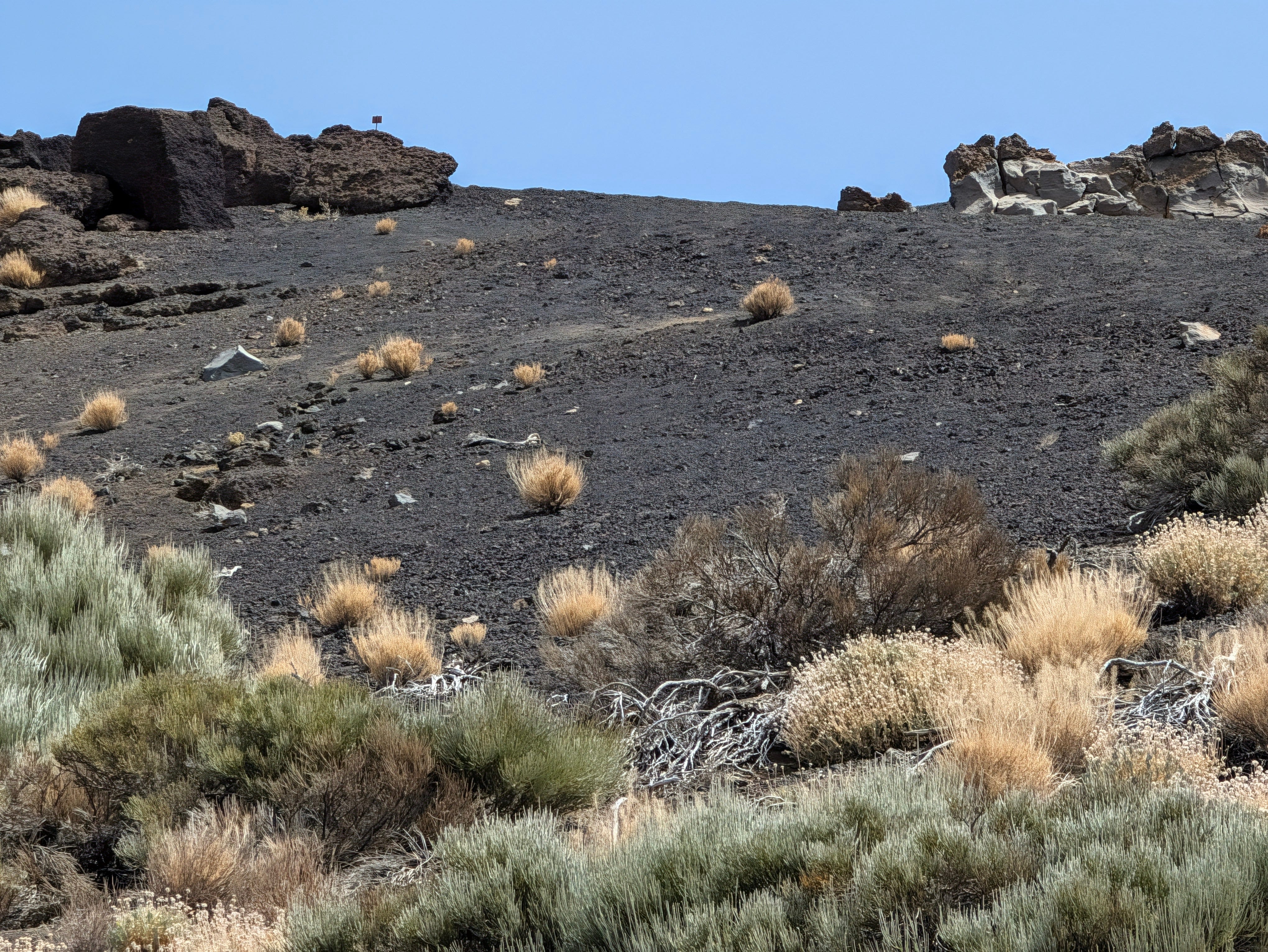
The descent starts to take its toll and jellification begins setting into the legs. I console myself with the idea that this will hopefully result in some more lean muscle in my flabby pins and hence give a boost next time I measure my body composition. Silver linings.
Back at the car, I determine that some lunch is in order and set off in search of a fine repast and cool drink. Cool drink yes, but made a bit of a food snafu. The potatoes with sauces was, well, potatoes with sauces, but the chickpea stew was a little meaty. My proto Spanish has come in quite handy but I failed to check this. To be fair the young waiter seemed to have difficulty understanding what I was ordering in English, Spanish or just pointing at the menu, so didn't want to push it. Whilst trying to pick out the chickpeas and vegetables from the stew (don’t judge, I was hungry!), I’m pretty sure that I ingested some Chorizo. I guess I could have spat it out but I mean it didn’t taste bad! I refuse to agonise over it. Could have been worse, I couldn’t identify the other meat in there but fairly sure there might have been some rabbit.
And to take my mind off it, it appears that getting comfortable with windy roads happens quite quickly and I rediscovered the joy of driving through great scenery on the way back to the hotel. So that’s a bonus.
Although this, it turns out, will be short lived.
Yes, the warm glow of road trip lasts until I have to set off on the road down to the coast again the next morning. Battling against local trucks and buses coming up the hill and commandeering the entire road on those bends. All very exciting, and I suspect a reasonable cardio workout. Later in the day the sat nav gets me completely lost in a number of small towns. At one point I even end up going the wrong way down what turns out to be a a very narrow one way street. The people coming the other way looked very surprised but, to be fair, nowhere near as abusive as people would have been in the UK. I expect they are used to lost tourists and some of these places have mad one way systems.
Anyway, I am zipping over to the other side of the island today for a little history and culture. First stop, the Pyramids of Guimar.
This is somewhat controversial. The official line is that these where agricultural terraces built in the 19th century.
Not so, according to Thor Heyerdahl.
[For those not of a certain age, Thor Heyerdahl was famous (particularly in the 60s and 70s when he was a sort of earthbound Eric Von Daniken) for trying to prove that ancient peoples could cross vast distances and hence cultures could spread across the world a lot earlier than most people would think. In 1947, he crossed the Pacific on a balsa would raft in the Kon-Tiki expedition. Later projects included crossing the Atlantic on reed boats, trying to make Rapa Nui Moai etc.]
And it turns out that the museum here was built by Thor Heyerdahl. He was convinced that the pyramids here share similarities with those in South America and in the Mediterranean and, given his views on ancient peoples’ ability to travel, would likely suggest that South Americans had crossed over to the Canary Isles on reed boats carried by the ocean currents and indulged in cultural exchange. There is some curious stuff suggesting that the Guanche may have travelled in the opposite direction - all to do with skin colour and the ability to grow beards. Probably very much of its time.
The whole exhibition here lays out his ideas on the cross-fertilisation of ancient civilisations and draws comparisons across the whole world including Malta, Sicily, Sardinia (on my list!) and, after some of my travels, I am pretty on board with this. There are also exhibitions on Polynesia and Rapa Nui (Easter Island) and a garden of the world’s most poisonous plants - for no readily apparent reason other than that they can charge extra for it.
So, did Thor Heyerdahl have some interesting points? Sure.
Are these ancient pyramids rather than recent constructions? You can judge for yourself.


For what its worth ( and this will probably surprise regular readers), I think that the official explanation is correct. Agricultural terraces are everywhere on the island. Of course I had to wander around the path looking for energy signatures - I couldn’t not! Nada. Nothing happening from the path (you can’t walk in amongst the pyramids) .. except for something emanating from this point…
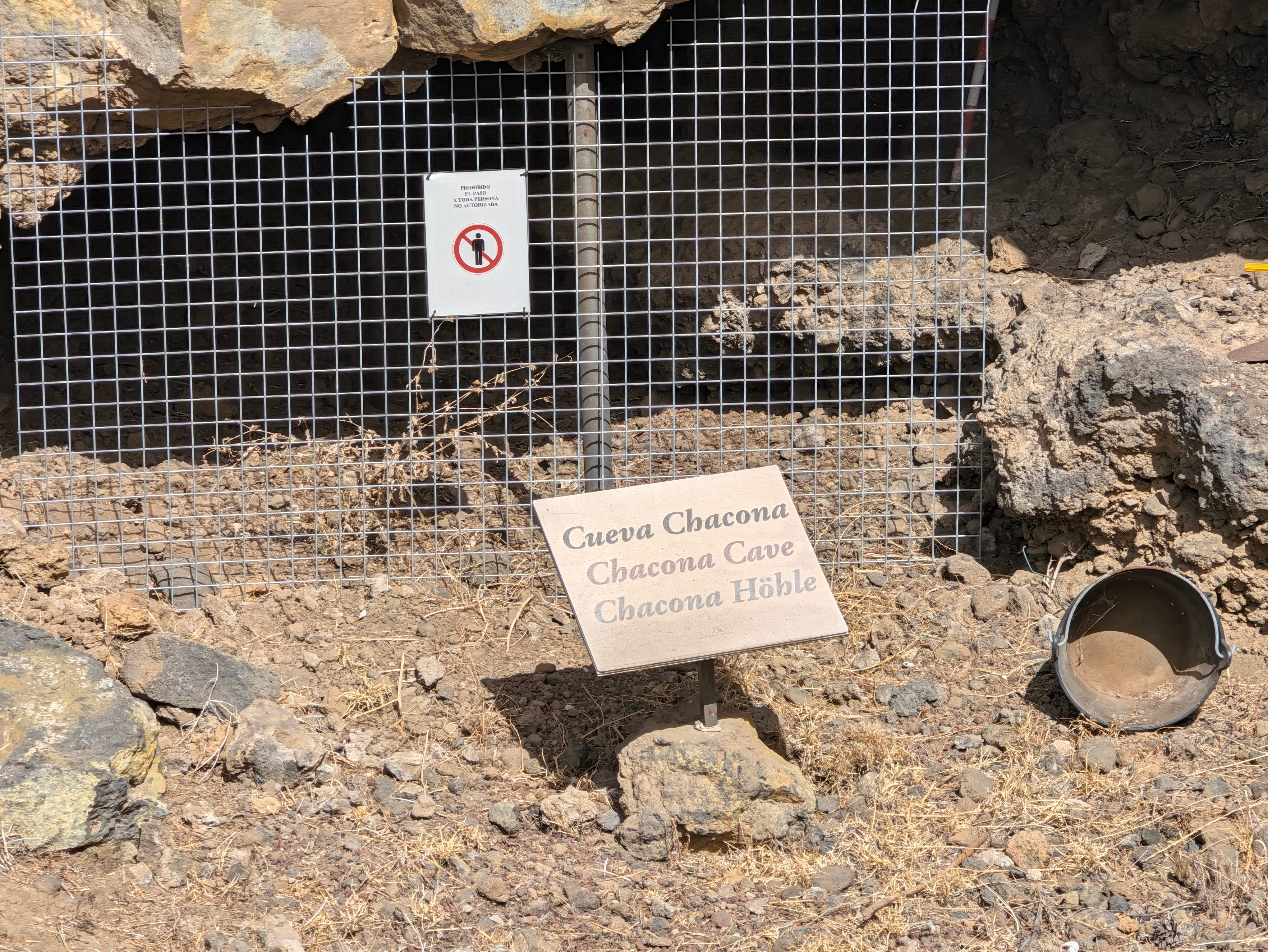
This is a cave under Pyramid 1 that was excavated and evidence of Guanche occupation was found. Interesting.
Anyway, thanks Thor! Whatever the truth of the matter, it is a cool site to visit.
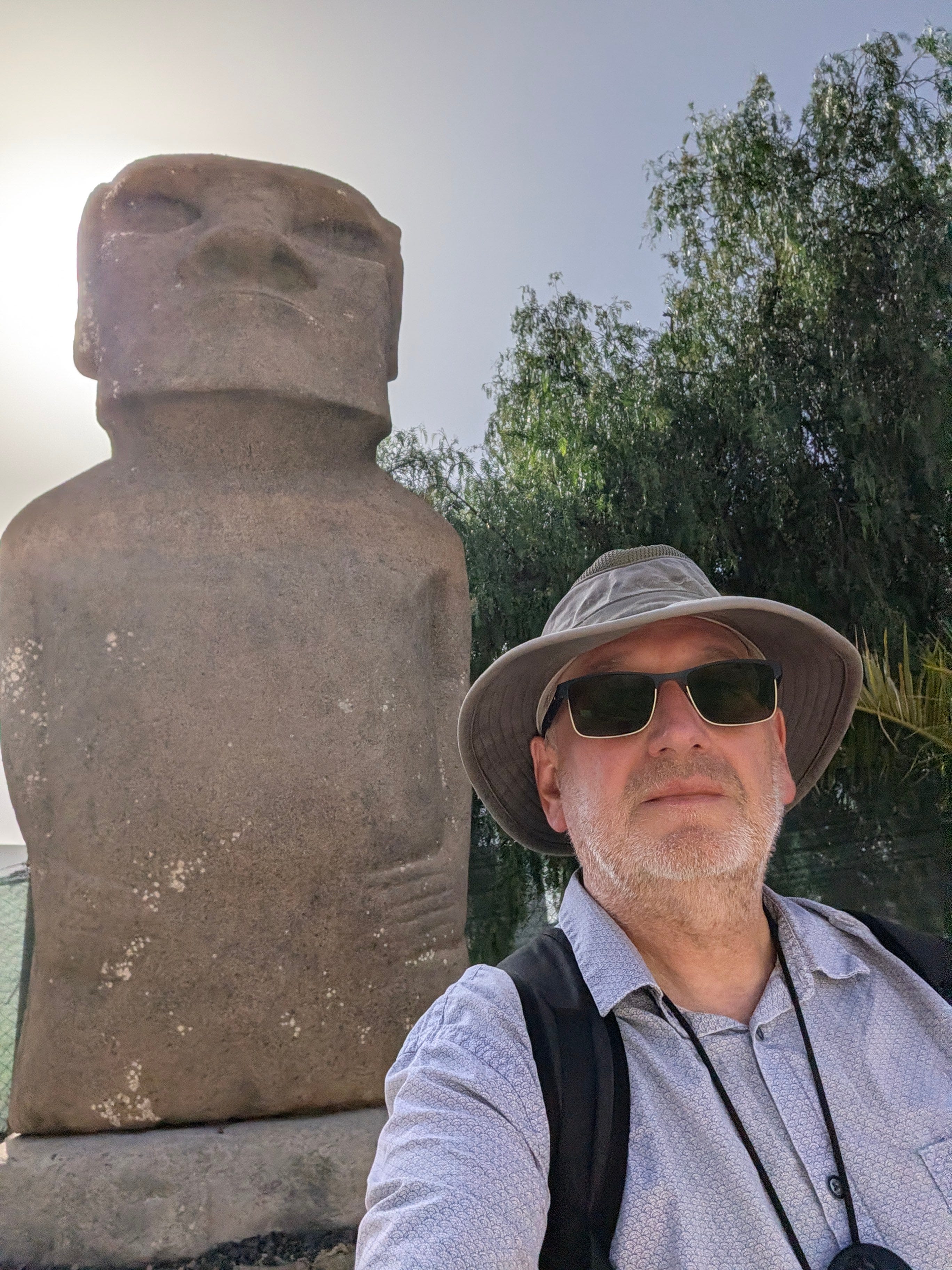
I say cool, but the temperature today is brutal. Its about 37C here and I gather that it is up to 40 in Teide National Park (glad I did that yesterday!), And the air is pretty thick. The Calima is up. This is a feature of Tenerife. I think it is largely sand, but it results in major haziness - the sea is barely visible from the main coast road. The Calima has been a concern as I have been trying to arrange a star gazing trip, but I’m told that these generally take place above the Calima anyway. Problem solved!
Then off to drive into another town because, as anyone who has travelled and driven into unfamiliar urban areas knows, there is no more fun to be had than trying to negotiate this sort of stuff. To be fair, it is not to bad driving into Santa Cruz, other than one missed turn and a loop around, but it looks like an interesting place with some spectacular buildings and, I am told by those in the know, Nottingham style trams.
I am here to visit MUNA (Museo de la Naturaleza y Arqueología, obviously), a museum outlining the history of the Canary Isles from their volcanic formation, to the beginnings of life, the flora and fauna and prevailing ecosystems to be found and the diverse cultures of the various islands.
All very impressive. I have come to see some mummies.
Now that is not to say that I am uninterested in the other stuff, but I have failed to download the audio tour and the commentary on the exhibits (in contrast to many museums in tourist areas) is only in Spanish. I quite enjoy trying to translate these at first, obviously with some support from Google Translate, but it gets to be a but of a strain.
Bring on the Guanches!
When I do find the Guanche mummies, I actually find it quite disturbing - tortured looking figures staring at me though empty eye sockets. Sent a shiver down my spine.


But the baby ones were really sad
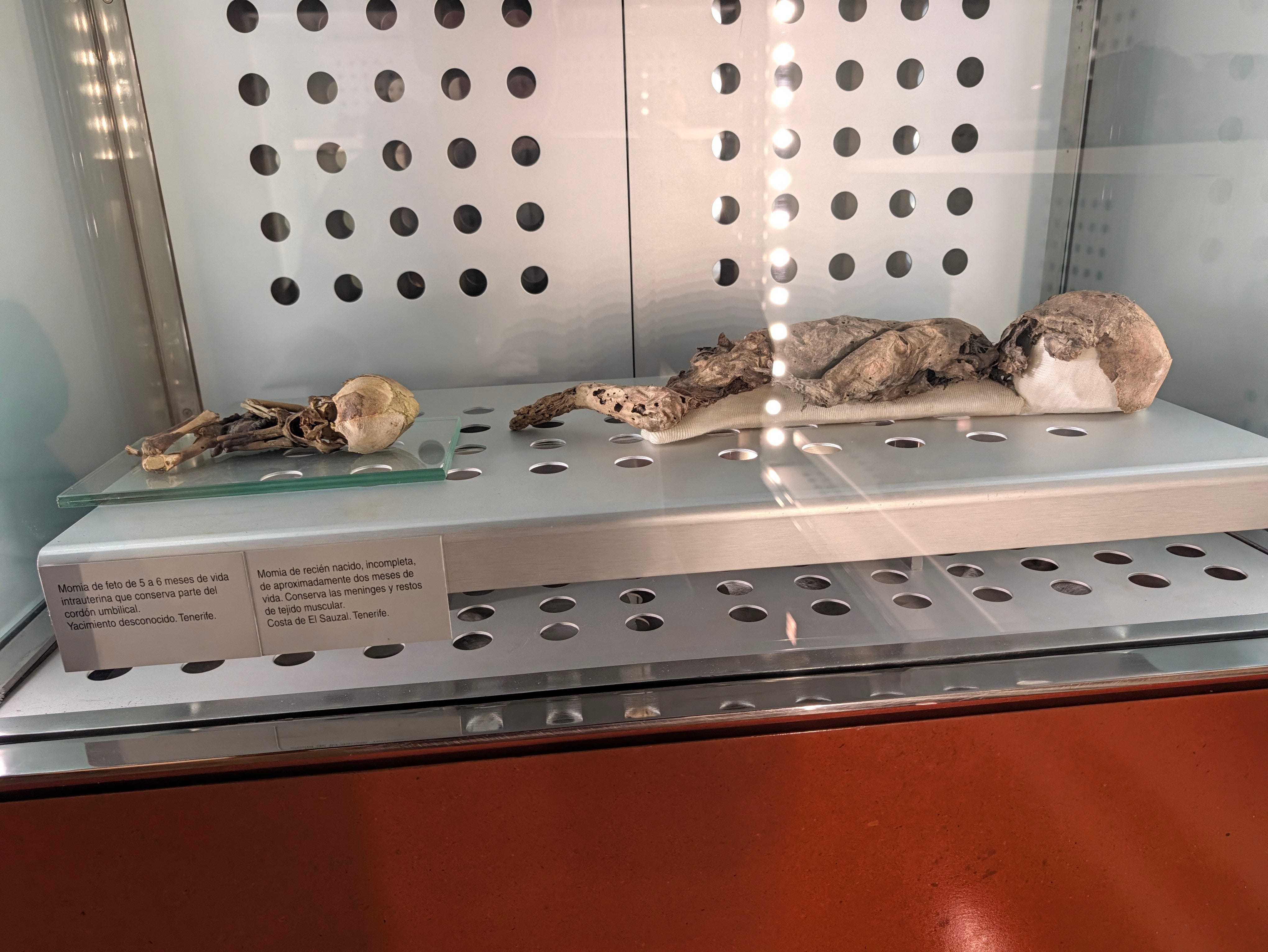
I read something yesterday about the process - apparently it involves a lot of lard, herbs and cloth wrappings. Almost like they were making human candles.
And so (after an unecessarily extensive search for how to pay for the car park), its back out into the Calima for a silt smothered, serpentine trip back to the hotel.